


Upper Body Workouts as a Powered Wheelchair User
After sharing the start of my journey, I wanted this next post to get practical. One of the biggest barriers I faced when first going to the gym was simply not knowing where to start. Most workout plans assume you can stand, stabilise your lower body, or hop between machines without thinking.
That wasn’t my reality, or the reality of many powered or manual wheelchair users and trying to follow those plans left me feeling more frustrated than motivated.
But over time and with the help of Claudia, my amazing personal trainer, I’ve built a routine that feels strong, safe, and actually enjoyable. Today I’m sharing some of the exercises that form the core of my upper-body training, along with the adaptations that allow me to do them confidently from my powered wheelchair.
This isn’t about “the right way.” It’s just my way—developed through trial, error, laughter and the occasional questionable gym machine that clearly never met a disabled person in its life.
One Piece of Equipment That Suprised Me - The Rowing Machine
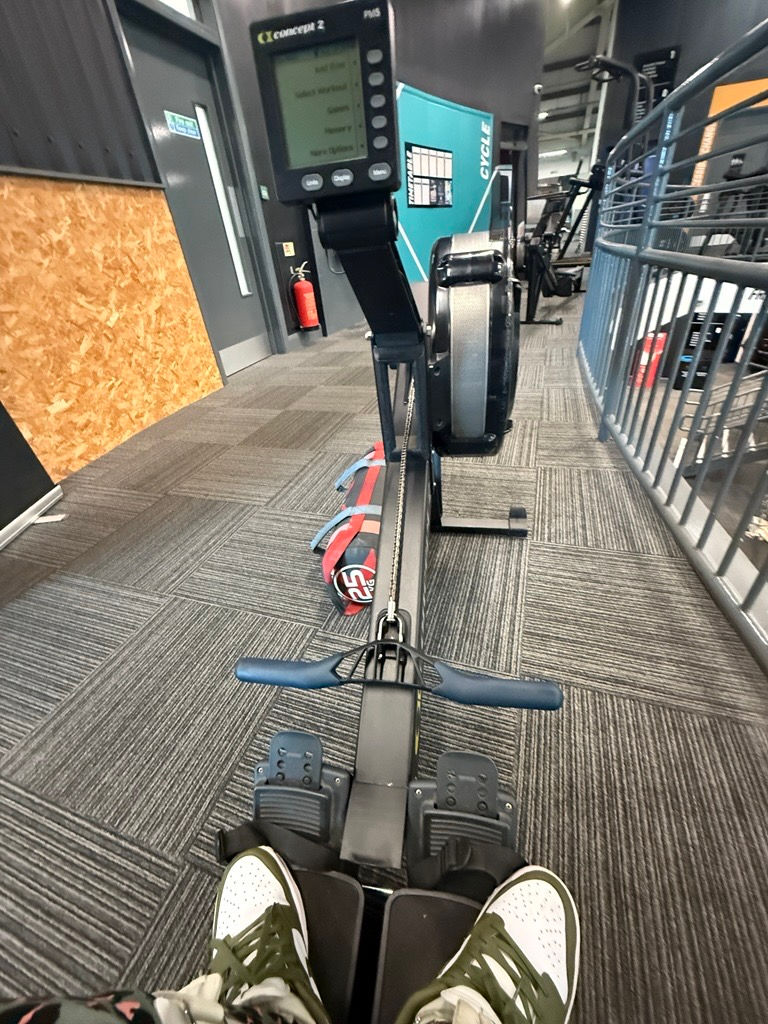
If there’s one machine I never expected to use as a powered wheelchair user, it’s the rowing machine. At first glance, it looked completely inaccessible — a fixed seat, a sliding rail and a setup built for full-body movement. But with a bit of creativity (and the willingness to question “why not?”), it turns out it’s not only doable, it’s one of my favourite pieces of cardio equipment.
We remove the original seat completely, and because my powered wheelchair can position right up to the footrests, I’m able to sit in an ideal rowing posture. From there, I use my arms, shoulders and back to pull — focusing on rhythm and control rather than speed. It’s a brilliant cardio option that doesn’t require transferring and still engages so much of my upper body. It’s honestly been a game-changer in making cardio accessible and enjoyable.
Pull Exercises I Use Most
1. Seated Lat Pull-Ins (Cable Machine)
Not a traditional lat pulldown (because many pulldown stations are inaccessible), but honestly?
This version hits my back even better.
Adaptation:
I pull down diagonally to my ribcage.
My wheelchair gives me the perfect anchor point for core stability.
2. Single-Arm Rows
Great for balance, posture, and evening out strength differences.
Adaptation:
We use a low cable setting
I hold the side of my chair with the non-working arm for stability.
3. Bicep Curls (Dumbbells or Cable)
Simple but effective—and easy to do from anywhere.
Adaptation:
I keep elbows tight to my body.
Lighter weights with slower reps keep control high.
Consistency, Motivation & Support
A huge part of why this routine works for me comes down to consistency and support. My weekly personal training sessions with Claudia keep me focused, accountable, and progressing. She challenges me, adapts exercises on the spot, and helps me notice improvements I might otherwise overlook.
But Claudia’s not the only one helping me stay motivated. Once a week, I also go to the gym with my brother-in-law, James. He’s become a big part of my routine, not because he pushes me to do more reps or lectures me about form, but because he’s there, showing up alongside me. Having him there keeps me motivated, makes sessions more fun, and adds accountability in a way only family can: supportive, and slightly competitive. Those sessions remind me that fitness isn’t just about strength, it’s also about connection and making the experience something I genuinely look forward to.
Why These Exercises Work for Me
They are:
Adaptable
Space-efficient
Safe to do seated
Easy to scale
Great for strength and posture
Wheelchair-friendly
Built around what my body can do
And most importantly—they make me feel strong.
What’s Coming Next
In Post #3, I’ll be talking about:
The accessibility challenges inside gyms
What makes equipment disabled-friendly (or absolutely not)
How I navigate gym spaces confidently
The small hacks that make training smoother
And the moments no one prepares you for
Because working out as a powered wheelchair user isn’t just about the exercises—it’s about everything around them.


Comments